


 Image credits: Freepik / Pexels
Rehabilitating Diastasis Recti is more than a matter of performing a few stomach exercises; it's about re-developing core strength, enhancing muscle coordination, and re-establishing functional movement patterns. Diastasis recti is a disorder in which the muscles of the rectus abdominis (the "six-pack" muscles) split along the midline, leaving a gap in the connective tissue called the linea alba. This commonly happens during or after pregnancy but may also occur in men and non-pregnant women based on factors such as obesity, bad posture, or lifting heavy loads.
From a physiotherapist's point of view, Diastasis Recti Rehab is not only to close the gap but also to restore strength, stability, and control of the deep core muscles that stabilize the spine and pelvis. Let's delve into the main principles that govern good rehabilitation.
The initial recovery step is to realize that the core is not merely about your abs; it's a system. It's composed of the diaphragm, pelvic floor, transverse abdominis, and deep back muscles. If one component of the system becomes weakened or loses coordination, tension builds, and the abdominal wall begins to bulge or separate. Thus, treatment has to address the entire core unit, not isolated ab exercises.
Breathing is a key component of core stability. Most individuals hold their breath when they're exercising, which raises intra-abdominal pressure and exacerbates the separation. Proper breathing stabilizes the pressure. The rehabilitation program most often begins with diaphragmatic breathing, deep breathing in which the abdomen rises on inhalation and softly draws in on exhalation. This synchronized breathing pattern enables the core and the pelvic floor to contract naturally, providing a basis for strengthening safely.
The transverse abdominis is the innermost abdominal muscle and functions as a natural corset around your belly. Engaging this muscle is critical in Diastasis Recti Rehab because it brings the two sides of the rectus abdominis closer together. Gentle activation techniques like drawing the belly button in towards the spine (without taking a breath) when lying or sitting may retrain these deep stabilizing muscles.
One of the most frequent errors individuals commit throughout recovery is doing conventional ab exercises such as crunches or sit-ups. These raise intra-abdominal pressure and create outward bulging of the abdominal wall, exacerbating the separation. Rather, controlled movements that stimulate the core from the inside out, such as heel slides, pelvic tilts, and modified planks, should be used.
The pelvic floor and core musculature function together as a unit. A weak or hyperactive pelvic floor can influence abdominal healing. The inclusion of pelvic floor strengthening (such as Kegel exercises) with coordination to breathing ensures that pressure is adequately distributed within the core. This method also avoids complications such as pelvic organ prolapse or incontinence in recovery.
Posture faults, particularly forward pelvic tilt or slouched sitting, can continuously stress the abdominal wall and hinder healing. Restoration of proper body alignment, sitting, standing, or lifting, is an essential aspect of the rehabilitation process. Posture awareness techniques are sometimes taught by physiotherapists to reduce stress on the linea alba and achieve even muscle activation during daily activities.
Rehabilitation has to proceed slowly and methodically. First, you do exercises that activate deep muscles gently, control breathing, and develop posture awareness. When there's better strength and control, you can introduce more dynamic movements, like bridges, modified planks, and resistance-based core exercises. The rule is to proceed only if you can sustain proper alignment and control without bulging or pain.
Diastasis Recti Rehab is a gradual process that requires patience and regular practice. Consistency helps retrain the nervous system and rebuild muscle coordination. Developing a mind-muscle connection, being aware of how your core activates and relaxes, ensures that you’re engaging the right muscles during every movement.
Rehabilitation goes beyond exercise sessions. Everyday movements such as lifting your baby, getting out of bed, or standing for long hours can affect your recovery. Learning safe movement patterns, like rolling to your side before sitting up or using your legs instead of your core when lifting, helps protect the healing tissue. Additionally, maintaining good nutrition, hydration, and sleep supports tissue repair and overall recovery.
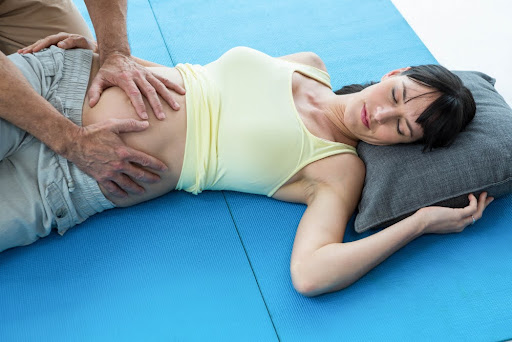
Though self-care is crucial, professional evaluation is necessary for recovery that is both safe and effective. A physiotherapist who is an expert in pelvic and core rehabilitation can determine the degree of separation, assess muscle imbalances, and create a tailored program based on your requirements. They might also employ interventions such as manual therapy, biofeedback, or taping to facilitate healing and muscle activation.
Healing diastasis recti is not perfection; it's functional restoration, balance, and body confidence. An evidence-based program founded on breathing, posture, and controlled strengthening can create lasting change without stressing or hurting your body.
With the skilled intervention of physiotherapists such as Dr. Leena Daware, patients are given individualized treatment aimed at restoring the body's natural strength and alignment. Her evidence-based Diastasis Recti Rehab focuses on gradual progress, awareness, and body-mind healing—to enable people to regain core stability and live pain-free with renewed confidence.
