


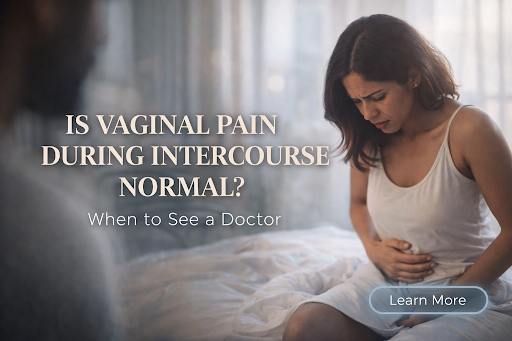
Experiencing vaginal discomfort during sex can be quite confusing and upsetting. Not many women are ready to talk about it; thus, they usually assume it is normal or something they just have to live with. Of course, sometimes mild discomfort may occur due to temporary causes, but one should never neglect persistent or severe pain during intercourse. Your body signals you when it is in need of help; therefore, the first step to your relief is knowing the reason.
In the framework of our women's health services, we frequently encounter patients who have been suffering in silence with painful sex for months or even years before seeking help. Simply talking and evaluating early could make a big difference.
There are cases when temporary discomfort might come up. For instance:
In cases like these, the pain is generally minor and goes away after some changes, such as longer foreplay, using lubricants, or solving emotional issues.
On the other hand, pain that is sharp, burning, deep, or recurring is not considered normal. Medically, this condition is known as dyspareunia. When it lasts even after lifestyle changes, it needs a proper check-up.
Pain during intercourse can either be superficial (felt at the vaginal opening) or deep (felt inside the pelvis). Knowing the difference can be helpful in discovering the problem.
Hormonal fluctuations, especially after delivery, during nursing, or at the time of menopause may lead to a decrease in vaginal natural moisturizing. It is a common cause of irritation resulting in a burning feeling.
Various types of infections, such as:
may cause symptoms that include discomfort, itching, abnormal discharge, or swelling.
Vaginismus is a condition where there is a reflex spasm of the pelvic floor muscles, thus making penetration painful or difficult. It has been associated with anxiety, sexual trauma history, or fear of intercourse.
This condition is characterized by the development of endometrial tissue outside the uterus. Patients experience dyspareunia, menorrhagia, and severe dysmenorrhea.
Pain during intercourse, which is often position-dependent, may be experienced in cases of pelvic organ structural abnormalities such as ovarian cysts and uterine fibroids.
Emotional well-being has a lot to do with sexual health. Physical symptoms can be worsened by various factors, including stress, relationship issues, traumatic experiences from the past, or performance anxiety. Sometimes, negative emotions may translate into physical symptoms such as muscle tightness, resulting in pain.
It is crucial to note that pain should be taken seriously, whether it is physical or emotional in origin.
Feeling discomfort during intercourse is one thing, but when it becomes frequent or intense, then it is necessary to get a gynaecologist to examine you. The following are the reasons for which one should consider medical consultation:
Early assessment will be helpful to detect infections, hormonal changes, or any pelvic condition that may be the cause of the complaint before they progress.
In our clinic, we start with a medical history and then proceed with a pelvic exam if necessary. In some instances, we may also request an ultrasound scan or some lab work to verify the diagnosis.
There is no universal remedy that works for everyone. Care is totally dependent on the specific problem.
Patients may be given antifungal, antibiotic, or antiviral drugs.
The doctor may decide to give topical estrogen or other hormonal therapy.
Physiotherapy of the pelvic floor, counseling, and relaxation techniques are very helpful.
The patient may initially receive medication. If the condition warrants it, one of the following may be done: a minimally invasive procedure or surgery.
We are committed to creating a comfortable and non-judgmental environment in which patients can openly share their intimate issues without hesitation. Pain during intercourse is a medical problem, not something to feel embarrassed about.
Medical care is crucial, but certain modifications can assist in the recovery and comfort:
Often, making a few minor changes helps to enhance medical care and raise the level of comfort.
Sometimes the condition aggravated by endometriosis or pelvic inflammatory conditions becomes serious if the pain is ignored. Getting the diagnosis early not only brings relief from the symptoms but also ensures reproductive health in the long run.
Sexual pleasure is a very important component of general health. When intercourse is painful regularly, it means that your body is sending you a warning that something needs attention. Listening to that signal can prevent future complications.
Experiencing vaginal discomfort during sex should never be considered something you must endure. Many reasons for painful intercourse can be diagnosed and treated properly, with medical advice being the main step. Seeking help will not only get your body back in comfort but also your mind to be confident again.
At the clinic, we treat such matters with great care, detailed examination, and a tailored solution. If you have discomfort problems, a visit to a seasoned gynaecologist like Dr. Leena can uncover the source of the problem and the way to a successful treatment.
Whether you are trying to figure out solutions for painful intercourse treatment, the causes of dyspareunia, having pelvic pain during intercourse, looking for vaginal dryness remedies, or wondering where to get help from women’s sexual health specialists, you can count on professional assistance at any time. The sooner you deal with these issues, the more you will gain in life and intimate happiness.
