


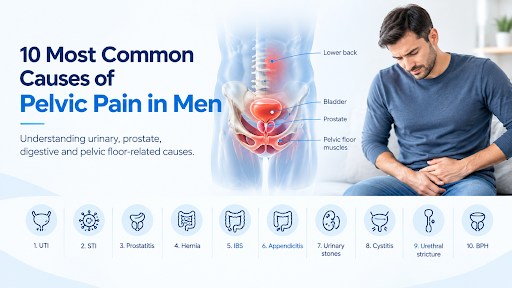
Pelvic pain can have many possible causes, ranging from urinary and prostate conditions to digestive problems, infections, stones, and musculoskeletal or pelvic-floor issues. The pain may be mild, persistent, intermittent, or accompanied by changes in urination, bowel movements, or sexual function. Because different conditions can produce similar symptoms, identifying the underlying cause is important.
This guide covers 10 possible causes of pelvic pain in men and some of the symptoms that may occur alongside them. It is intended for general information and does not replace a medical evaluation.
A urinary tract infection can cause pain or pressure in the lower abdomen and pelvic area. Men with a UTI may also experience burning or pain while urinating, frequent or urgent urination, cloudy or strong-smelling urine, or blood in the urine.
UTIs in men may sometimes be associated with another urinary or prostate problem, so persistent or recurrent symptoms should be evaluated by a healthcare professional.
Some sexually transmitted infections can cause pelvic or genital discomfort. Infections such as gonorrhea and chlamydia may also cause symptoms including painful urination or genital discharge.
Because different infections can produce similar symptoms, appropriate testing is important when an STI is suspected. Persistent pelvic or genital symptoms should not be self-diagnosed.
Prostatitis refers to inflammation or infection involving the prostate. It can cause pain in the pelvis, lower abdomen, genitals, perineum, or lower back, along with urinary symptoms such as painful or frequent urination. Some forms of prostatitis are bacterial, while chronic pelvic pain syndrome is not caused by a bacterial infection.
Chronic pelvic pain syndrome can also involve pelvic-floor muscle dysfunction, nerve irritation, or other factors, which means the source of symptoms may not always be an infection.
A hernia occurs when an internal organ or tissue pushes through a weakened area of muscle or surrounding tissue. Depending on its location, a hernia can cause discomfort or pain in the groin, lower abdomen, or pelvic region.
The discomfort may become more noticeable with activities such as lifting, coughing, or straining. A healthcare professional can assess whether a hernia is contributing to pelvic or groin pain.
Irritable bowel syndrome is a gastrointestinal condition that can cause abdominal pain along with changes in bowel habits. Some people experience constipation, diarrhea, bloating, or increased gas.
Because the digestive organs are located within and around the pelvic region, gastrointestinal problems such as IBS can sometimes contribute to pain or discomfort in this area.
Appendicitis occurs when the appendix becomes inflamed. It commonly causes abdominal pain that may become more severe over time and can sometimes be felt in the lower right abdomen or pelvic region.
Appendicitis can require urgent medical assessment, particularly when pain is severe or accompanied by symptoms such as fever, nausea, vomiting, or increasing abdominal tenderness.
Kidney or urinary tract stones can cause significant pain as they move through the urinary system. Depending on the location of the stone, discomfort may be felt in the back, side, lower abdomen, groin, or pelvic region.
Other symptoms can include blood in the urine, nausea, vomiting, frequent urination, or pain during urination. Urinary stones can also contribute to urinary blockage in some cases.
Cystitis refers to inflammation of the bladder and can cause pelvic or lower abdominal discomfort, urinary urgency, frequency, and pain during urination.
Bladder pain can have different causes, including infection and other bladder conditions. Therefore, persistent symptoms should be assessed rather than assuming that every case of bladder pain is caused by a bacterial infection.
A urethral stricture is a narrowing of the urethra, often associated with scar tissue. It can interfere with normal urine flow and may cause a weak or reduced urine stream, difficulty urinating, or incomplete bladder emptying.
Urethral strictures can develop after injury, inflammation, infection, or certain medical procedures. Because urinary obstruction can have several causes, proper evaluation is important.
Benign prostatic hyperplasia, or BPH, is an enlargement of the prostate that commonly occurs with aging. It can put pressure on the urethra and contribute to urinary symptoms.
Common symptoms include difficulty starting urination, a weak urine stream, frequent urination, urgency, and waking during the night to urinate. BPH is more common in older men, with symptoms becoming increasingly common with age.
Not all pelvic pain comes from an infection or an organ-related condition. Pelvic floor muscles, nerves, and other tissues can also contribute to pelvic discomfort. Pelvic floor muscle tension or dysfunction may occur alongside conditions such as chronic pelvic pain syndrome and can be associated with urinary, bowel, or sexual symptoms.
A proper assessment can help determine whether pelvic floor dysfunction is contributing to the symptoms and whether pelvic floor physiotherapy may be appropriate.
Persistent or unexplained pelvic pain should be evaluated by a healthcare professional, particularly if it affects urination, bowel movements, sexual activity, or daily life.
Seek prompt medical attention if pelvic pain occurs with symptoms such as:
Acute bacterial prostatitis, for example, can cause fever, chills, urinary symptoms, and significant pain and requires medical treatment.
When pelvic floor muscle dysfunction contributes to pelvic pain, a pelvic floor physiotherapist can assess muscle function, coordination, tension, and other factors that may be associated with symptoms.
Dr. Leena Daware's practice provides pelvic health services for men, including support for pelvic pain associated with prostatitis, coccyx or tailbone pain, genital pain, rectal pain, and chronic pelvic pain. The practice also addresses related urinary, bowel, and sexual health concerns.
Treatment is individualized according to the assessment and may include pelvic floor muscle coordination training, manual techniques, relaxation or breathing work, bladder and bowel retraining, core exercises, and lifestyle guidance.
Pelvic pain can have many different causes, and similar symptoms may occur with urinary, prostate, digestive, musculoskeletal, or pelvic-floor conditions. This is why persistent pain should not be ignored or treated based only on symptoms.
If you are experiencing pelvic pain in men, a proper medical assessment can help identify the underlying cause. Where pelvic floor dysfunction is involved, a qualified pelvic floor physiotherapist can work alongside appropriate medical care to assess and manage the musculoskeletal factors contributing to the symptoms.
For information about men's pelvic health and pelvic floor physiotherapy, you can explore Dr. Leena Daware's pelvic health services.
